Showing posts with label arts. Show all posts
Thursday, 5 June 2008
Ratbags From the End of the World...
Thoughts about artists and Ratbags, here and abroad: a ramble and a brief history.
(RT's speech for The Sydney Institute from 2006)
Monday, 26 May 2008
Thursday, 15 May 2008
A Modest Proposal for Wollongong
[Marcus Westbury] also looks at how we rank our cultural priorities. The multimillion-dollar upgrade to the Regional Arts Centre in his home town of Newcastle prompts him to question the value of arts institutions and ask whether we can buy art by building iconic centres such as the Guggenheim in Bilbao. The Sydney Morning Herald 15/10/07
While some arts commentators question the usefulness of institutions for the display, performance and “consumption” of art, the ACO is rather attached to those places as it’s good to have a roof over one's head when performing. The Wollongong Council has once again postponed a decision on whether to demolish the Wollongong Town Hall, until recently the ACO’s Wollongong performance venue.
But perhaps the Wollongong Council shouldn’t wait much longer to get rid of Town Hall? Destroying it would be a progressive - even Boulezian - move: as we all now know, the art of the future is to be found in the graffiti-daubed streets or on the rubble of demolished civic theaters and Town Halls rather than concert halls and boring museums.
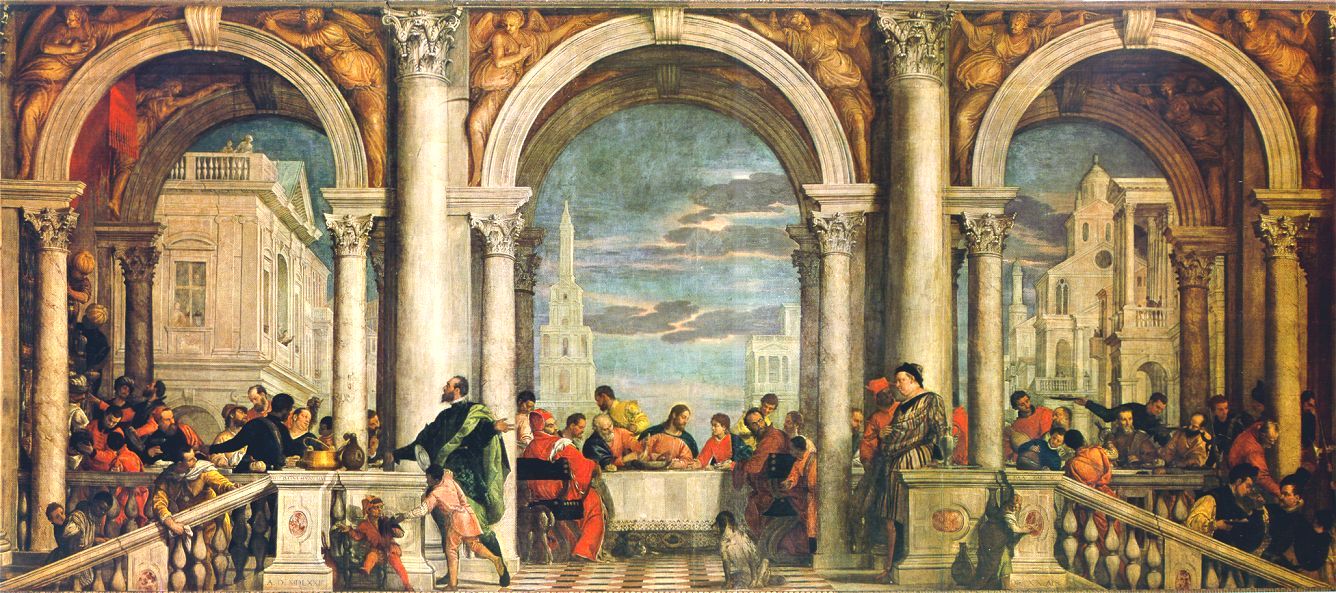
Compared to the visual and aural splendours of Grand Theft Auto IV, orchestral concerts aren’t much chop, are they? And why bother with fly-weight “painters” like Manet (Fig. 1) when there’s mordant political commentary on the walls of Hosier Lane, Melbourne (Fig. 2).
Nuance, depth and originality of thought are, like, so 19th Century.
We predict that once it gets rid of its tired institutions, Wollongong will be the art capital of Australia.
M. Croche
Labels:
arts,
culture,
m. croche,
opinion,
Wollongong Town Hall
Thursday, 8 May 2008
ART IN THE NEWS? NOT LIKELY
Sydney Arts Journo reports on a worrying trend: the axing of arts reporting and criticism in our papers. Fairfax has a dastardly plan to keep you, the reader, from engaging with culture (and prevent writers from earning a living). Read more.
The only thing that may change this trend is readers demanding that their newspapers actually publish something to pad out the ads and advertorial. More likely scenario: interested people will increasingly turn to the blogosphere to learn what's going on. Seems a pity, though, as it's much nicer to read a paper with your Saturday AM coffee than lug your laptop to the cafe.
Robert Murray
The only thing that may change this trend is readers demanding that their newspapers actually publish something to pad out the ads and advertorial. More likely scenario: interested people will increasingly turn to the blogosphere to learn what's going on. Seems a pity, though, as it's much nicer to read a paper with your Saturday AM coffee than lug your laptop to the cafe.
Robert Murray
Friday, 18 April 2008
AUSTRALIA 2020
This weekend, 1000 of the Australia's finest minds meet in Canberra for the Australia 2020 Summit.
Read Richard Tognetti's submission to the Summit (he was invited but can't attend because of the ACO's European Tour).
Then, have your say: debate and offer your suggestions for the future of Australian art, leave a comment below or email aco (at) aco (dot) com (dot) au.
Read Richard Tognetti's submission to the Summit (he was invited but can't attend because of the ACO's European Tour).
Then, have your say: debate and offer your suggestions for the future of Australian art, leave a comment below or email aco (at) aco (dot) com (dot) au.
Thursday, 17 April 2008
SOME THOUGHTS FROM RT
Art is the fertiliser of our inner ecology - Michael Leunig
Quite rightly there is enormous concern about our ‘outer ecology’ – we’re all alarmed about global warming for example, but I think we also need to consider our ‘inner ecology’, where ‘cultural cooling’ is just as real a threat to our well being.
My good wishes to everyone attending the 2020 Summit. Gathering our country’s best brains to consider where Australia is headed is a positive initiative. I am unable to attend, as I am undertaking an extensive European tour with the Australian Chamber Orchestra, and also preparing for the 2008 Maribor Festival in Slovenia, in my role as Artistic Director. Interestingly, Maribor has been designated the cultural capital of Europe in 2012.
Consider this description:
Dressed in tight fitting suits, androgynous chiselled men and women move elegantly and expressively through the air with powerful thighs, high on adrenaline.
Could this only be ballet?
No, it could also describe surfing!
Is this ballet?
The men cuddle and huddle so lovingly and their thoughts are just for each other. For ease of prancing these men wear tight little shorts revealing whatever the viewer may want to glimpse.
No, it’s football!
Whereas the elite arts set is viewed as:
A privileged few, upper echelon, crème de la crème, snobs, snoots, elitists, pretenders, egotists, stuffed shirts and Chardonnay sipping wankers. Your progeny ought to be prevented from associating with these types.
The elite sports set is seen as:
The best, cream o’ the crop, our heroes, the future, something to shed a tear about, our obsession, worthy of investment, winning for our country. Our kids should be encouraged to follow in their hallowed footsteps.
We have become used to these negative sentiments in this country and they fuel an entrenched perception that the arts are elitist, exclusive, and indeed a burden on a society which has an ever increasing challenge to contain the disparity between the “haves” and the have-nots”.
What has gone wrong? Why should we sit here writing a justification for artists aiming for elite stature, whilst others jump in rapture at the elite standing of a swimmer? When you fly on a plane do you expect anything less than an elite pilot? When you’re taken hostage do you expect anything less than an elite anti-terrorist team to save you?
****
ELITISM
“Arts funding is welfare for the middle class”
(Wollongong councillor commenting on funding the local library, 2008)
“When I came to office in 1996 there was a lopsided bias towards culture”
(Former PM, national press club, 2007)
“A vote for Labor is a vote for the elite Arts”
(Liberal party campaign slogan, 1996)
To be elite In Australia is seen by Government, business and the wider community as something to embrace – unless you are an artist.
It is a shameful fact that of all the full-time orchestras in Australia only one has an Australian as Artistic Director.
****
A FUNDAMENTAL CHANGE IS NEEDED
The benefits of involvement in music from a young age are now widely recognised throughout the world. Research has shown that playing music increases the capacity to reason, improves concentration, memory, spatial skills, self-expression and teamwork. Projects such as the Venezuelan ’National System of Children and Youth Orchestras’ and ‘Buskaid’ Soweto Strings Project have shown the dramatic effect direct involvement in music can have. But beyond these specific projects, there is wide recognition that music and the arts provide stimulation for all, and an acknowledgment that creative arts drive innovation - ‘fertiliser for the mind’.
In many European countries governments recognise this through investment of large amounts of money into music/arts – even in difficult economic times. The UK recently announced a ₤332 million investment in music education to purchase instruments, start orchestras and choirs and give free tuition for a year so that “every primary school will become a music school”. As shown in the Summit discussion paper, the USA trails most other countries including Australia in levels of government funding, but this is balanced by substantial tax incentives for business involvement in the arts and a strong history of benefactor support. Australia also falls short of many comparable countries in this respect, but without either substantial government funding or government encouragement to private philanthropy, we inhabit something of a no man’s land when it comes to funding the arts.
If countries with greater social challenges than Australia can see the benefits, indeed the necessity, of participation in the arts from a young age, we must surely aim to do this too. Music and the arts must be accessible to all Australians, not just because it feels good, but because it brings good.
To achieve this goal there must be investment in infrastructure such as music centres, performance venues, education systems, access to musical instruments and specialised tuition. Learning an instrument must be part of every Australian child’s normal healthy education.
Given the disturbing statement in the Summit discussion paper that ‘socio-economic background remains a major influence on children’s access to music’, it would seem we have a long way to go. As the indigenous population is the most disadvantaged group in our society, wouldn’t it be fantastic if we set ourselves the goal of having an Indigenous Australian as a member of the ACO by 2020?
The Australian Chamber Orchestra is a proudly Australian organisation with increasingly multi-national personnel - 47% of the players being born overseas. We would like to boast a higher percentage of Australian born players, but the lack of quality music education precludes our goal. Please continue to consider the stark contrast of Australia’s education to the highly effective music education in Scandinavia – and the tangible results. It is a serious regret that the youth of Australia has not been offered comparable opportunities to fulfil their musical potential.
The message is simple – what we need is:
EDUCATION – INNOVATION - EDUCATION
****
AUSTRALIA ON THE WORLD STAGE
There is an expectation that Australian artists should live, work and create here, however, the geographical isolation creates great challenges if one wishes to continue performing and creating at the highest level. We need to foster an environment that encourages our finest artists to stay and contribute to Australian society. If not we risk flushing more and more of our artists down the brain-drain.
Given that the Australian Chamber Orchestra has just embarked on its 32nd international tour, our commitment to being cultural ambassadors is self-evident. Taking the best of Australia to the world stage builds relationships between countries bringing substantial benefits across a broad the cultural and economic spectrum. In addition, these tours propel artistic standards and achievement for Australian artists. I am led to believe that support for this has recently been diminished. Hence, I would strongly urge that this support be made available again at the Federal level to enable this costly, but vital work to continue.
****
CULTURAL CAPITALS
The idea of designating one Australian town or city annually to be the ‘Cultural Capital’ would serve to focus and stimulate local artists and artists. Take for example NSW’s third largest city, Wollongong, where we find a city with a broken heart, lying supine in a cultural coma with no cultural infrastructure. THE LOCAL COUNCIL HAS RECENTLY CONDEMNED THEIR ONLY VENUE SUITABLE FOR ORCHESTRAL AND CHAMBER MUSIC PERFORMANCE, THE WOLLONGONG TOWN HALL.
Making the arts an important concern for a whole community for even just a year would have far-reaching effects in such a city, serving to generate a cultural dialogue with the rest of the country and the wider world.
Perhaps a "Cultural Capital" Program, a national program to raise investment in cultural capital, government sponsored and administered and given impetus, attraction and additional support by private and community sources and a permanent secretariat. It would be a kind of "private-public partnership" for cultural infrastructure applying and adapting the principles used for physical infrastructure. Among the outcomes of the Program, once established, would be the annual designation of a "cultural capital" (which could be a State, Territory or Federal political capital but need not be and perhaps ought not be) and the implementation, with the active presence of government, of a "national cultural capital" program of events.
Consider what the Guggenheim Museum has done for Bilbao, Spain; what high quality music education has achieved in Scandinavia and what massive input into cultural infrastructure has done for both Ireland and Spain.
Indeed, let’s consider the impact building the Sydney Opera House has had on the whole country. If government at all levels supports the passion and commitment of the arts community, the results will thread a rich, powerful and enlightening vein throughout this vast and raw land.
Richard Tognetti
Please comment. We'll pass your remarks on to the Australia 2020 Summit.
Quite rightly there is enormous concern about our ‘outer ecology’ – we’re all alarmed about global warming for example, but I think we also need to consider our ‘inner ecology’, where ‘cultural cooling’ is just as real a threat to our well being.
My good wishes to everyone attending the 2020 Summit. Gathering our country’s best brains to consider where Australia is headed is a positive initiative. I am unable to attend, as I am undertaking an extensive European tour with the Australian Chamber Orchestra, and also preparing for the 2008 Maribor Festival in Slovenia, in my role as Artistic Director. Interestingly, Maribor has been designated the cultural capital of Europe in 2012.
Consider this description:
Dressed in tight fitting suits, androgynous chiselled men and women move elegantly and expressively through the air with powerful thighs, high on adrenaline.
Could this only be ballet?
No, it could also describe surfing!
Is this ballet?
The men cuddle and huddle so lovingly and their thoughts are just for each other. For ease of prancing these men wear tight little shorts revealing whatever the viewer may want to glimpse.
No, it’s football!
Whereas the elite arts set is viewed as:
A privileged few, upper echelon, crème de la crème, snobs, snoots, elitists, pretenders, egotists, stuffed shirts and Chardonnay sipping wankers. Your progeny ought to be prevented from associating with these types.
The elite sports set is seen as:
The best, cream o’ the crop, our heroes, the future, something to shed a tear about, our obsession, worthy of investment, winning for our country. Our kids should be encouraged to follow in their hallowed footsteps.
We have become used to these negative sentiments in this country and they fuel an entrenched perception that the arts are elitist, exclusive, and indeed a burden on a society which has an ever increasing challenge to contain the disparity between the “haves” and the have-nots”.
What has gone wrong? Why should we sit here writing a justification for artists aiming for elite stature, whilst others jump in rapture at the elite standing of a swimmer? When you fly on a plane do you expect anything less than an elite pilot? When you’re taken hostage do you expect anything less than an elite anti-terrorist team to save you?
****
ELITISM
“Arts funding is welfare for the middle class”
(Wollongong councillor commenting on funding the local library, 2008)
“When I came to office in 1996 there was a lopsided bias towards culture”
(Former PM, national press club, 2007)
“A vote for Labor is a vote for the elite Arts”
(Liberal party campaign slogan, 1996)
To be elite In Australia is seen by Government, business and the wider community as something to embrace – unless you are an artist.
It is a shameful fact that of all the full-time orchestras in Australia only one has an Australian as Artistic Director.
****
A FUNDAMENTAL CHANGE IS NEEDED
The benefits of involvement in music from a young age are now widely recognised throughout the world. Research has shown that playing music increases the capacity to reason, improves concentration, memory, spatial skills, self-expression and teamwork. Projects such as the Venezuelan ’National System of Children and Youth Orchestras’ and ‘Buskaid’ Soweto Strings Project have shown the dramatic effect direct involvement in music can have. But beyond these specific projects, there is wide recognition that music and the arts provide stimulation for all, and an acknowledgment that creative arts drive innovation - ‘fertiliser for the mind’.
In many European countries governments recognise this through investment of large amounts of money into music/arts – even in difficult economic times. The UK recently announced a ₤332 million investment in music education to purchase instruments, start orchestras and choirs and give free tuition for a year so that “every primary school will become a music school”. As shown in the Summit discussion paper, the USA trails most other countries including Australia in levels of government funding, but this is balanced by substantial tax incentives for business involvement in the arts and a strong history of benefactor support. Australia also falls short of many comparable countries in this respect, but without either substantial government funding or government encouragement to private philanthropy, we inhabit something of a no man’s land when it comes to funding the arts.
If countries with greater social challenges than Australia can see the benefits, indeed the necessity, of participation in the arts from a young age, we must surely aim to do this too. Music and the arts must be accessible to all Australians, not just because it feels good, but because it brings good.
To achieve this goal there must be investment in infrastructure such as music centres, performance venues, education systems, access to musical instruments and specialised tuition. Learning an instrument must be part of every Australian child’s normal healthy education.
Given the disturbing statement in the Summit discussion paper that ‘socio-economic background remains a major influence on children’s access to music’, it would seem we have a long way to go. As the indigenous population is the most disadvantaged group in our society, wouldn’t it be fantastic if we set ourselves the goal of having an Indigenous Australian as a member of the ACO by 2020?
The Australian Chamber Orchestra is a proudly Australian organisation with increasingly multi-national personnel - 47% of the players being born overseas. We would like to boast a higher percentage of Australian born players, but the lack of quality music education precludes our goal. Please continue to consider the stark contrast of Australia’s education to the highly effective music education in Scandinavia – and the tangible results. It is a serious regret that the youth of Australia has not been offered comparable opportunities to fulfil their musical potential.
The message is simple – what we need is:
EDUCATION – INNOVATION - EDUCATION
****
AUSTRALIA ON THE WORLD STAGE
There is an expectation that Australian artists should live, work and create here, however, the geographical isolation creates great challenges if one wishes to continue performing and creating at the highest level. We need to foster an environment that encourages our finest artists to stay and contribute to Australian society. If not we risk flushing more and more of our artists down the brain-drain.
Given that the Australian Chamber Orchestra has just embarked on its 32nd international tour, our commitment to being cultural ambassadors is self-evident. Taking the best of Australia to the world stage builds relationships between countries bringing substantial benefits across a broad the cultural and economic spectrum. In addition, these tours propel artistic standards and achievement for Australian artists. I am led to believe that support for this has recently been diminished. Hence, I would strongly urge that this support be made available again at the Federal level to enable this costly, but vital work to continue.
****
CULTURAL CAPITALS
The idea of designating one Australian town or city annually to be the ‘Cultural Capital’ would serve to focus and stimulate local artists and artists. Take for example NSW’s third largest city, Wollongong, where we find a city with a broken heart, lying supine in a cultural coma with no cultural infrastructure. THE LOCAL COUNCIL HAS RECENTLY CONDEMNED THEIR ONLY VENUE SUITABLE FOR ORCHESTRAL AND CHAMBER MUSIC PERFORMANCE, THE WOLLONGONG TOWN HALL.
Making the arts an important concern for a whole community for even just a year would have far-reaching effects in such a city, serving to generate a cultural dialogue with the rest of the country and the wider world.
Perhaps a "Cultural Capital" Program, a national program to raise investment in cultural capital, government sponsored and administered and given impetus, attraction and additional support by private and community sources and a permanent secretariat. It would be a kind of "private-public partnership" for cultural infrastructure applying and adapting the principles used for physical infrastructure. Among the outcomes of the Program, once established, would be the annual designation of a "cultural capital" (which could be a State, Territory or Federal political capital but need not be and perhaps ought not be) and the implementation, with the active presence of government, of a "national cultural capital" program of events.
Consider what the Guggenheim Museum has done for Bilbao, Spain; what high quality music education has achieved in Scandinavia and what massive input into cultural infrastructure has done for both Ireland and Spain.
Indeed, let’s consider the impact building the Sydney Opera House has had on the whole country. If government at all levels supports the passion and commitment of the arts community, the results will thread a rich, powerful and enlightening vein throughout this vast and raw land.
Richard Tognetti
Please comment. We'll pass your remarks on to the Australia 2020 Summit.
Subscribe to:
Posts (Atom)


