Tuesday, 27 May 2008

High Surf - An Excerpt


The whole genesis of surfing was somewhere between a performing art and a sport. Surfing’s always had that for me.


It’s not a problem most classical violinists face. But for Richard Tognetti, the prospect of salt water dripping from his nose during a performance is a very real concern. Especially when he has a $10 million Giuseppe Guarneri del Gesu violin, built in 1743, resting under his chin.

‘It’s happened during rehearsal.’ admits Tognetti, ‘but not during a concert.’ The saline nasal drip was a result of his long hours immersed in the ocean chasing waves.

The rare violin, known as the Carrodus, was recently purchased by an anonymous Australian benefactor and made available to Tognetti, creative director of the world-renowned Australian Chamber Orchestra. That is the kind of devotion the ACO inspires in its fans.

It would surprise many in the classical music world to know that Tognetti has had things other than rare antique violins occupying his attention lately.

‘I couldn’t have done a concert yesterday because I’d surfed for two or three hours,’ says Richard. ‘It’s been a great month of surf in Sydney.’

A phenomenal run of swell has been playing havoc with Richard’s schedule. Quick bolts south to Sandon Point, near Wollongong, have interrupted practice sessions.

‘I think it’s a damn blessing to have both music and surfing in my life,’ says Richard. ‘It’s like the Ancient Greeks: body and mind’

Richard says these twin pursuits, and the release surfing provides from the focused and disciplined world of classical music, have had great benefits. ‘It’s the ultimate Zen experience. I used to think I’d solve my problems by going surfing, but it’s better than that. You can’t even consider them. You just get lost in a dream. It’s a brilliant release.’

Not too many surfers get lured away from the wave riding lifestyle by the delights of classical music, but Richard is one such rare creature. He grew up in Wollongong on the beach and naturally followed his older brother into the surf at Puckey’s, North Wollongong. ‘There was a gang of groms, I wasn’t part of it but my brother was. He was always a terrific surfer.’

What does he remember from those early forays into the waves? ‘Sitting out the back and trying to catch a wave and finally catching one and being overwhelmed by it,’ he recalls. But when he was eleven, Richard moved north to study violin at the Sydney Conservatorium of Music, and surfing took a back seat.

‘Then I didn’t surf for years and years until I was seventeen. I found it too hard to do intermittently,’ says Richard. Eventually the pull of the Bondi beach breaks proved too much for the city-bound music student. ‘I can remember the gradual improvement that comes with being an intermittent surfer. It’s the hardest thing I’ve done,’ he says. What kept him persevering? ‘Just the common thread of that thrill, being lost in it,’he says. ‘Just getting pummelled is so important, I reckon. If you get pummelled once it’s no good, but if you get pummelled over and over you get used to it.’

Regular trips to southern Western Australia, and opportunities to combine touring and surfing fed the habit. ‘When we tour regional areas – places like Shell Harbour – surfing there and doing a concert in Kiama that night, that’s a pretty nice thing to do.

But while Richard’s surfing progress may have been gradual, his musical career surged from one peak to another. He trained under esteemed teachers such as Alice Waten and William Primrose at the Sydney Conservatorium, and Igor Ozim at the Berne Conservatory in Switzerland, where he was awarded the prestigious Tschumi Prize as the top graduate soloist in 1989. That some year he became artistic director of the Australian Chamber Orchestra, when he was just twenty four. His was a controversial appointment, particularly because of his youth, but his bold adventurous leadership of the ACO over the last seventeen years has earned it an international reputation for expanding the boundaries of classical music. Now over forty, Richard is widely regarded as one of the great classical violinists in the world today, and was made a National Living Treasure in 1999.

Richard is a very physical violinist, conducting as he plays, crouching and extending with the peaks and troughs of the music, riding the sound waves. He walks on stage with the surfer’s easy gait, cracks jokes, hitches up is pants or gazes about casually when not actually playing. In another time or place, the stuffy world of classical music might have found his informality too much. But his talent redeems all.

A review in the London Telegraph 2006 is typical of the kind of praise that the ACO and Tognetti earn: ‘This concert was that rare thing, a beautifully shaped whole in which all the parts were absolutely in tune with each other and with the space. . .The orchestra played like angels throughout, with springing rhythmic grace and impeccable style . . . (Richard Tognetti) is on of the most characterful, incisive and impassioned violinists to be heard today.’ Or this, from The Times in London: ‘The Australian Chamber Orchestra is a ticket to musical bliss.’

These days, it is the idea of combining his surfing and his music that has Richard excited. He recently collaborated with Tom Carroll and Ross Clarke-Jones to produce a soundtrack to the big wave surfing video Horrorscopes, which documents a dangerous mission to surf a huge offshore reef near the Cape of Good Hope in South Africa.

Working with composer Michael Yezerski, and ex-Midnight Oil guitarist Jim Moginie, Richard’s haunting violin provides a suitably eerie soundscape for the images of the cold, lonely, shark-infested waters.

‘That was just so fortunate,’ says Tom Carroll, who was won over to the power of classical music as a surfing soundtrack. ‘It goes hand in hand with tow-in and big waves, the romantic side of it and the reality. The awesome power of the ocean, it’s best married with music with real full on, unadulterated emotion.’

Richard also performed on the recent album Look by well-known surfing musician Pico, who recorded the album in a mobile studio while on a surfing road trip down the east coast of Australia.

Close followers of professional surfing may even recall an appearance by Tognetti at the Rip Curl Pro at Bells Beach in 1993. Close friend and ex-pro surfer Derek Hynd convinced Richard to play electric violin as accompaniment to recordings of past Bells winners discussing the event – a kind of spoken –word classical-music performance art. Most of the surfing crowd didn’t quite know what to make of the experimental artform, but Richard remains excited by the synergy between surfing and music. In 2007, he’s staging a tour of regional surfing centres to take his music to a younger audience.

‘We’ve only just started,’ he says. ‘The whole genesis of surfing was somewhere between a performing art and a sport. Surfing’s always had that for me.’

He imagines playing live at the beach to accompany a surfing performance-almost like an aquatic ballet. ‘I’d love it. I’ve always dreamt of it. It’s one of the most difficult things to do but one of the most appealing and one of the most satisfying.’

At the same time, he stresses, he’s not on any mission to convert the surfing world to the virtues of classical music. ‘I’m not into the tribal thing of surfing. I’m not much of a missionary. It’s always refreshing when people talk about their musical experiences and they happen to be surfers. It was edifying when Tom Carroll started coming to the concerts and was blown away by the experience of sitting in a concert hall. The only difference when you’re at classical music concerts, you are expected to just shut up and listen. For some that can be quite frustrating, but it can also be powerful, when you are exposed to yourself like that.’

There have been times when he’s played violin spontaneously after a good day of waves and made a profound impression on his surfing friends who aren’t normally exposed to classical music. ‘I remember playing for a group of friends in WA. I’d be surfing at the Farm… and instead of losing the energy, by the time I played, I was fuelled by the experience of surfing. And I played in the Maldives once to one of the surf guides there. He’d never heard a violin before. I started playing a few notes and he burst into tears. Those kinds of things are pretty powerful.’

Richard reckons his own musical tastes are broad and he’d like to see a wider definition of surf music and a broader understanding of the kind of soundtracks that can best complement the beauty and drama of surfing. He cites the example of Pink Floyd’s ambient soundtrack to ‘70’s surf movie Crystal Voyager as an early influence in his understanding of how surfing and music can work together. ‘I can listen to thrash metal if it’s well played but I don’t see the marriage. The soundtrack in my head (to surfing) isn’t thrash metal,’ he says. He once used footage of the late Tahitian surfer Malik Joyeux (who drowned at Pipeline, Hawaii, in 2005) on a huge wave at Teahupo'o, in Tahiti, and set it to a Beethoven symphony, to see how it worked. ‘I thought that was overwhelming,’ he says.

Tognetti has been seen as something of a maverick in the classical music world, but has won over even his most ardent critics, breaking down barriers between musical genres and taking classical music to new audiences. A recent documentary on a year in the life of the ACO was appropriately titled Musical Renegades. ‘We feel Richard and the ACO are “renegades” from the stale, closed-off world that is sometimes associated with classical music and musicians,’ says the film director, Tim Slade. We took the word renegade in its more everyday usage not as a “defector”, as such, from a cause, but a breakaway who changes the status quo.’

Among his many groundbreaking collaborations and projects, Richard has also worked with former Midnight Oil singer (now Labor MP) Peter Garrett and cartoonist Michael Leunig in the performance and recording of Leunig’s Carnival of the Animals. He also worked on Peter Weir’s 2003 film Master and Commander - as composer, soundtrack soloist and violin tutor to Russell Crowe.

Does he think his taste for the adventurous and unusual in his musical career is influenced by his surfing? ‘That’s a very difficult question to answer. Let’s say, yes. A Wollongong surfer doing what I do?’ He leaves the question hanging ponderously.

It has been a remarkable journey for a surfer from Wollongong and Richard’s in no doubt surfing has played a large part in fuelling that journey. ‘As Terry Fitzgerald once said, it’s good to outlast the bastards. Coming from Wollongong, so many people are either mulled out or they’ve hit the plonk or they’ve turned to fat,’ says Richard, ‘but those who have kept surfing have kept living.’

Tim Baker
High Surf
Published by Harper Collins

Monday, 26 May 2008

John Storgårds Q&A

ACO: The music on this program will be unfamiliar to most people. What can they expect?

John Storgårds: This surely is a program of broadly unfamiliar pieces (or even composers, except Lutoslawski and of course Sibelius), but absolutely something to come and listen to. The audience can expect a nice bouquet of wonderfully colourful, communicating and exciting music of (more or less) our times.

Some audiences might approach a program of contemporary music a little nervously. What would you say to them to allay their fears? Why is it important that they hear this music?

The only important thing is to relax and open your ears. There is nothing to be afraid of in this program, also if many of the composers´ names might be totally unfamiliar and hard to pronounce… all the compositions are full of life and beauty in their own ways. And I do think there is always an important point in giving yourself a chance to listen to something you haven’t heard before, as the world is overfull of familiar music and too many boring ways of approaching it, both as a listener and sometimes performer.

What links these works together?

There is a sense of almost hypnotically rhythmical ‘flow’ in both the minimalistic piece by Juozapaitis and in the bigger Hämeenniemi work, with its improvisational elements and influences from India. Interspace by the Japanese composer Ichiyanagi is in this program concept exactly what the title of it says, as I think in a beautiful way, and the great Lutoslawski work simply has everything in itself, in an absolutely gripping and most communicative way. The little Sibelius piece at the end functions actually already as a nice traditional encore.

Eero Hämmenniemi’s Chamber Concerto instructs the soloist (and at one point the whole orchestra) to improvise. Is this confronting for a classically-trained musician? How do you approach pieces like this?

First of all I think classically-trained musicians – as any possible musicians – should definitely have a natural ability to improvise, with or without ‘composed’ rules. Something goes totally wrong in such classical education which takes this kind of music making away from you, and sadly this is still often exactly what happens in too many kinds of ‘serious classical education’. If you look at the history of classical music, improvisation has always been a major part of it all, except for some sequences of the 19th and 20th centuries. My Finnish close colleague Eero Hämeenniemi gives certain rules and scales to elaborate with for the improvisational parts of his Chamber Concerto, as does also Lutoslawski in Preludes and Fugue in a slightly more controlled way! Actually Hämeenniemi advises (in the score) that finally the answer to all questions of “am I allowed to?” is “Yes, you are.”

What inspired you to become a conductor? How is the experience of conducting different to being a violin soloist?

I feel myself as a fullblood-musician, and that’s what I want to stay for the future too. Conducting is nowadays a big bit of it all, but this definitely also goes for playing, especially as a chamber musician. Being a soloist is not that important, but I enjoy it as long as it feels possible to do it on top level. I never planned to become a conductor, it really just happened little by little, and when it did, I also went through serious studies in that field, not wanting to become one of all these great instrumentalists who are conducting as bad amateurs, no matter how interesting they are musically. Now I feel that I’m still developing both as a violinist and as a conductor, on proper grounds, and, above all, being a musician.

There are 30 professional orchestras in Finland (pop. 5.3 million), in Australia (pop. 20 million) there are nine. What can Australia learn from Finland about creating a more vibrant musical culture?

I don’t know enough of the differences between Finnish and Australian music education to really answer this. I do think that Finland really has achieved a lot of wonderful and high level things in the music field, as a result of effective education systems and also in some great individuals. But I’m as worried about the future there as anywhere, because of the increasing stupidity and overall wrong priority thinking among top politicians and media of today. Rebelliousness among artists, musicians, writers, intellectuals and any independently thinking people is as much needed today as ever!

Censored

A view on the Affaire Henson from overseas, here.

Plus, more in The Australian.

Saturday, 24 May 2008

Suburban Dreaming

Nice profile of author-illustrator Shaun Tan in The Weekend Australian, here.

The Good News

"Wollongong's administrators have come to the rescue of the town hall with a $1.6 million package aimed at saving the ageing building from almost certain destruction.

The move constitutes a complete turnaround in Wollongong City Council's position on the town hall after it voted to demolish the building in December last year."

Read more.

Thursday, 22 May 2008

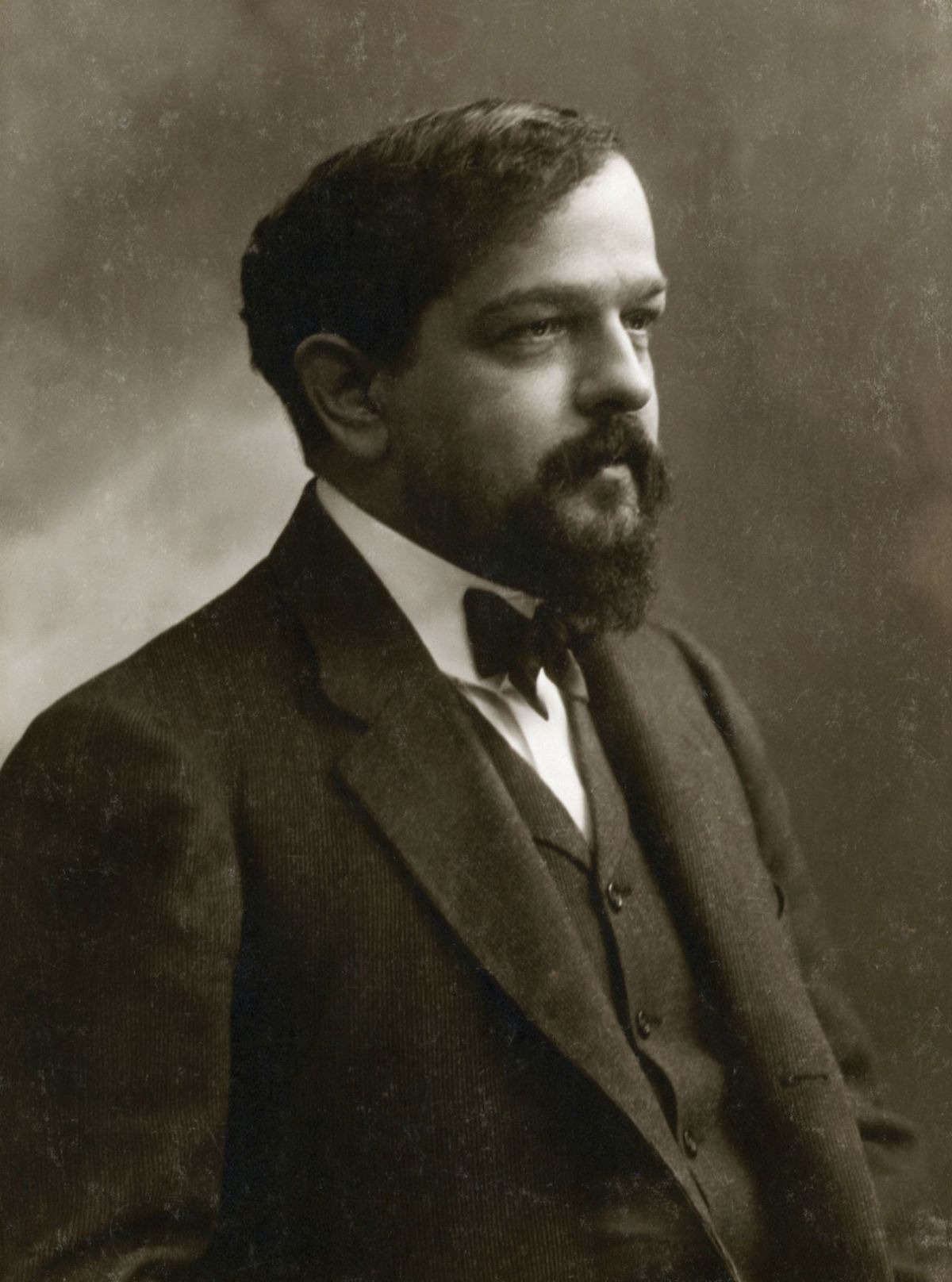
Advice from Debussy


"Don’t trust any piece that appears to hover in flight from heaven - it could have been brooded in the dark depths of a sick man’s brain! For instance, the finale of my Violin Sonata: the simple play on a thought that twists itself like a snake biting its own tail..."

Claude Debussy (1862-1918)

Tuesday, 20 May 2008

Musica Surfica Review


Surfing blog, Life's A Beach, has a review of Musica Surfica...

"... a sublime film shot on King Island, Australia that tracks the progress of a group of extraordinary surfers as they embark on a 'grand adventure' where classical music collides with radical surfing."

Read more

Monday, 19 May 2008

Thursday, 15 May 2008

A Modest Proposal for Wollongong

Fig 1. Edouard Manet, The Execution of Maximilian

[Marcus Westbury] also looks at how we rank our cultural priorities. The multimillion-dollar upgrade to the Regional Arts Centre in his home town of Newcastle prompts him to question the value of arts institutions and ask whether we can buy art by building iconic centres such as the Guggenheim in Bilbao. The Sydney Morning Herald 15/10/07

While some arts commentators question the usefulness of institutions for the display, performance and “consumption” of art, the ACO is rather attached to those places as it’s good to have a roof over one's head when performing. The Wollongong Council has once again postponed a decision on whether to demolish the Wollongong Town Hall, until recently the ACO’s Wollongong performance venue.

But perhaps the Wollongong Council shouldn’t wait much longer to get rid of Town Hall? Destroying it would be a progressive - even Boulezian - move: as we all now know, the art of the future is to be found in the graffiti-daubed streets or on the rubble of demolished civic theaters and Town Halls rather than concert halls and boring museums.

Compared to the visual and aural splendours of Grand Theft Auto IV, orchestral concerts aren’t much chop, are they? And why bother with fly-weight “painters” like Manet (Fig. 1) when there’s mordant political commentary on the walls of Hosier Lane, Melbourne (Fig. 2).

Fig. 2 Detail, Hosier Lane Graffito c. 2007

Nuance, depth and originality of thought are, like, so 19th Century.

We predict that once it gets rid of its tired institutions, Wollongong will be the art capital of Australia.

M. Croche

Friday, 9 May 2008

SIX DEGREES OF YOKO ONO


Why is Yoko Ono on our blog? Well, Ono was married to Toshi Ichiyanagi, one of the composers in our upcoming Audacious tour, from 1956-1963. She has a thing for musicians, apparently.

Thursday, 8 May 2008

ART IN THE NEWS? NOT LIKELY

Sydney Arts Journo reports on a worrying trend: the axing of arts reporting and criticism in our papers. Fairfax has a dastardly plan to keep you, the reader, from engaging with culture (and prevent writers from earning a living). Read more.

The only thing that may change this trend is readers demanding that their newspapers actually publish something to pad out the ads and advertorial. More likely scenario: interested people will increasingly turn to the blogosphere to learn what's going on. Seems a pity, though, as it's much nicer to read a paper with your Saturday AM coffee than lug your laptop to the cafe.

Robert Murray

Tuesday, 6 May 2008

RT IN HK

What a change of gear – from Luxembourg to arguably the most intense city on earth, the great concrete jungle that is Hong Kong. Working here with the Hong Kong Philharmonic directing a program of Mozart’s Paris Symphony, Vaughan Williams’s The Lark Ascending and Fantasia on a Theme of Thomas Tallis and Beethoven’s Seventh Symphony. As ever, Mozart is so much more difficult to render than Beethoven. His is a more gestural way of communicating whereas Beethoven is structural, developmental and evolutionary. It’s good having a large orchestra for the Paris – roughly the size Mozart used when first performed at the Concert Spirituel in Paris. On the other hand when he was in Prague the orchestra there was tiny – just four or so first violins.

Edo de Waart has done a great job turning this orchestra around and it now boasts some very fine players. What Hong Kong most desperately needs is a new hall, which is now mooted for 2015. Just north of the suburban line and past the New Territories is the fastest growing city in the world with a population of 8 million: Shenzen. It’s just completed a new hall with acoustics by a Dr Toyota and apparently it’s incredible.

Our last ACO stop on our European tour was in Luxembourg, pop. 80,000. They too have recently built themselves a hall. Last year they saw 160,000 attendances! In Hong Kong, I’m at the City Hall. Wollongong, pop. 400,000, is knocking their Town Hall down. Australia – what an embarrassment! Probably the wealthiest country in the world with the poorest cultural infrastructure.

We push on!

I haven’t heard much from the 2020 Summit, but scrolling through some blogs I found some disturbing reactions to there being a perceived disproportionate representation of ‘boring’ ‘ultra-conservative’ classical types.

One person [scroll down to comment #12] makes the comment that as classical music compromises only 1.5 % of CD sales that this was disproportionate to the general population.

The other disturbing reaction was to call Richard Gill ‘ultra-conservative’ because he and others are advocating a shift/return to a quality rigorous music education based on access to sound theoretical and practical training. Meaning you learn to play an instrument properly, as well as strum a guitar, and to read music.

Ok, he shouldn’t have brought hip hop into it ’cos we know hip hop artists can have a sharp and relevant language that resonates – think Danny Hock but at other end of the spectrum is mainstream of vacuous commercialism. As rapper 50 Cent’s manager said, “Our aim is to bring more brand to the youth quicker”. But just because you have access to a good and ‘Serious’ education doesn’t mean you can’t find your hip hop, beat, folk, post punk, pop, R&B voice. I don’t know what these people are proposing but to criticise the voice of Richard Gill, desperate to find the best possible education platform, is displaying a lamentable ignorance.

The other concern about the 1.5% of CD sales comment is equally worrying. The corollary of this argument being that the highest selling CD ‘artist’ should’ve been part of the Summit – an Australian pop idol?A devil’s advocate would argue that yes, they deserve to be part of it as (a) they may well be as creative as anyone else there (b) because they represent the tastes of the majority, which, it might be added, elected the government that made this summit possible.

I pick up on these comments because I think they are most probably indicative of a generally held view point that ‘serious’ art education is elitist and ultra conservative. I repeat: all Gill and others are advocating is finding structure in music education that affords our population a strong musical base. No one is forcing you to attend an ultra-conservative concert. If these critics did ever attend a concert or if they had the courage to extend themselves they’d find an ACO concert can be a collaboration with some of Oz’s best poets and folk/pop/avant-garde/singer-songwriters et al. and that the education we have received liberates us to fly higher and further with art. The more you know the more you can enjoy.

This is what we are advocating with music education.

Think of Miles Davis and his education [at New York’s Juilliard School] – without it he wouldn’t have been able to achieve what he did. Think, on the other hand, about Paul McCartney and how he struggles to write so called ‘classical’ music. It is common knowledge that his lack of musical training has shackled him in his post pop ambitions. Imagine what would have happened if he could… Jimmy Hendrix was planning on studying music at Juilliard (and to collaborate with Miles Davis) but then he went and choked on his own vomit. Again just imagine what he would have produced were he able to read and write music properly.

Now let’s consider the opposite reality of the ‘ultra-conservative’ Jonny Greenwood – one of the musical minds of Radiohead. He had an ‘ultra-conservative’ ‘serious’ music education at Oxford. He plays the viola, and the Ondes Martenot (YouTube here and here) as well as being one of the world’s leading rock guitarists. Hence he is able to compose music. His inspiration is from Eastern European contemporary composers such as Penderecki! He recently wrote the film score to There will be Blood. I rest my case.

Richard Tognetti

Thursday, 1 May 2008

PLAY YOUR PART

We all benefit from a strong, vibrant performing arts industry. While it’s easy to take a lot of things for granted in a nation like ours, we believe it is important to recognise and support those things that make Australia great. Join Australian Major Performing Arts Group (AMPAG) and their campaign partners, including Live Performance Australia and the Media, Entertainment and Arts Alliance, to show your support and celebrate the success of Australia’s performing artists by registering as a partner in their campaign. More.